
Android app testedUpdated 13 November 2026
Tinder Review:
Our free app test
Tinder still makes meeting new people feel simple. We test its free Android app, look beyond the first photo and weigh its UK audience against the constant invitation to upgrade.
Review by the DatingHelp editorial teamHands-on Android test · UK audience and pricing research

4.0Very good
Average of five criteria · see details

Tinder
Casual dating and relationship possibilities
- Free matching and chat
- Prompts, hobbies and relationship goals
- Substantial independently measured UK reach
4.0Very goodSee our ratings
Plus, Gold & Platinum
Check your in-app offer
Matching and chat are free.
Ad · We may earn a commission through our links.
Ad
Who is it for?
You want plenty of possibilities and room to choose your pace
Casual datingLong-term possibilitiesFree conversations
- Best suited to
- Singles seeking dates
- Age fit
- 20–40
- Minimum age
- 18+
- Free membership
- Limited likes; matching and chat included
Activity · editorial rating4.5 / 5Very high · national reach; local engagement varies
UK monthly audienceAbout 1.5 millionOfcom / Ipsos iris · May 2025
Main accessAndroid & iPhoneAlso available on the web
Contents
Our detailed ratings
Tinder is easy to settle into, with clear navigation, bold type and readable profile cards. The dark design feels modern and the main choices are easy to understand. Looking beyond the photograph takes more scrolling than the swipe screen suggests, while persistent subscription banners make profile editing feel crowded.
There is enough here to make a considered choice: photos, written prompts, hobbies and relationship goals can reveal both personality and practical fit. Explore adds a useful route by intention, and matching and chat remain free. The one-person-at-a-time feed gives little overview, while the likes list and more selective preferences are used to sell upgrades.
Tinder offers the scale we want from a mainstream UK dating app, making it a strong starting point for a broad choice of people. Ofcom measured about 1.5 million UK adult visitors in May 2025, placing it first among dating services. Falling reach and British reports of quiet matches temper that strength: a large national audience does not make every local feed lively.
Tinder works best when you are clear about your intentions and willing to check somebody else’s. Relationship goals and substantive prompts support both casual and longer-term dating, and verification and reporting tools provide useful safeguards. Sparse profiles and recurring British complaints about poor engagement and support make it less reassuring than the polished design initially suggests.
The free version offers real value because a mutual match can become a conversation without a subscription. Gold can remove the frustration of hidden incoming likes, while Plus and Platinum buy more control or visibility. Personalised offers, separate attention tools and automatic renewal make the paid proposition harder to judge; the benefit needs to be worth your full commitment.
Each criterion contributes 20% to our overall score of 4.0/5 · Very good.
Tinder: what to expect
Tinder is one of the UK’s best-known dating apps, bringing together people looking for casual dates as well as longer-term relationships. You browse profiles one at a time, like the people who interest you and can chat when the interest is mutual. You can use that basic match-and-chat service without a subscription.
We found the app easy to get to grips with, and fuller profiles offer more personality than Tinder’s reputation might suggest. Photographs still dominate, though, and upgrade offers are hard to escape. In this review, we look at the profile tools, how you find and contact people, the size of Tinder’s UK audience and whether Plus, Gold or Platinum give you a worthwhile reason to pay.
How we tested: We tested Tinder’s free Android app on 13 November 2026, reviewing profile tools, discovery, filters and safety features. Paid benefits were assessed from plan screens and official guidance. Our UK activity assessment draws on Ofcom audience research and British customer feedback.
Advantages and disadvantages
What we liked
- Free matching and chat make the basic service worthwhile
- A substantial independently measured UK audience
- Prompts, hobbies and relationship goals add useful context
- Readable, modern profile cards
- Paid tiers address distinct browsing frustrations
What could be better
- Photos dominate the first impression
- Detailed profiles require considerable scrolling
- Incoming likes and selective preferences push you towards payment
- Upgrade banners crowd the profile editor
- Paying for attention cannot ensure interest or a reply
Building a profile: more personality than the reputation suggests
Photos still set the agenda
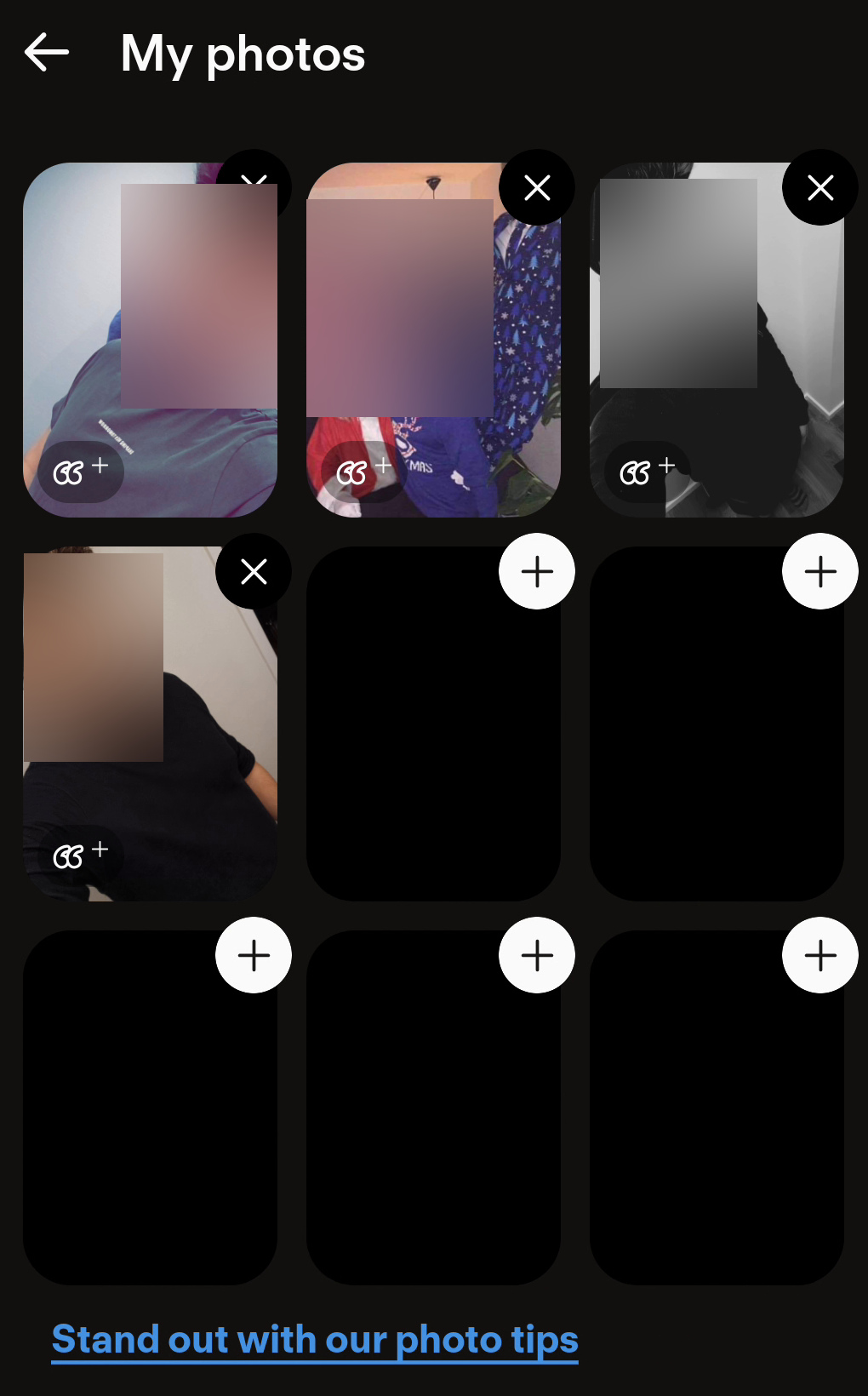
Your photographs are usually the first part of your Tinder profile another person sees, before they decide whether to open it or pass. The nine-position photo editor lets you build that introduction from more than a single flattering picture: a clear lead image, something showing how you spend your time and a few different sides of your life.
The grid makes the sequence easy to judge together. We would favour a varied set over a string of near-identical selfies, because it gives someone more to be curious about. The editing space is useful; choosing photographs that say something about you still takes thought.
A bio and prompts can do different jobs
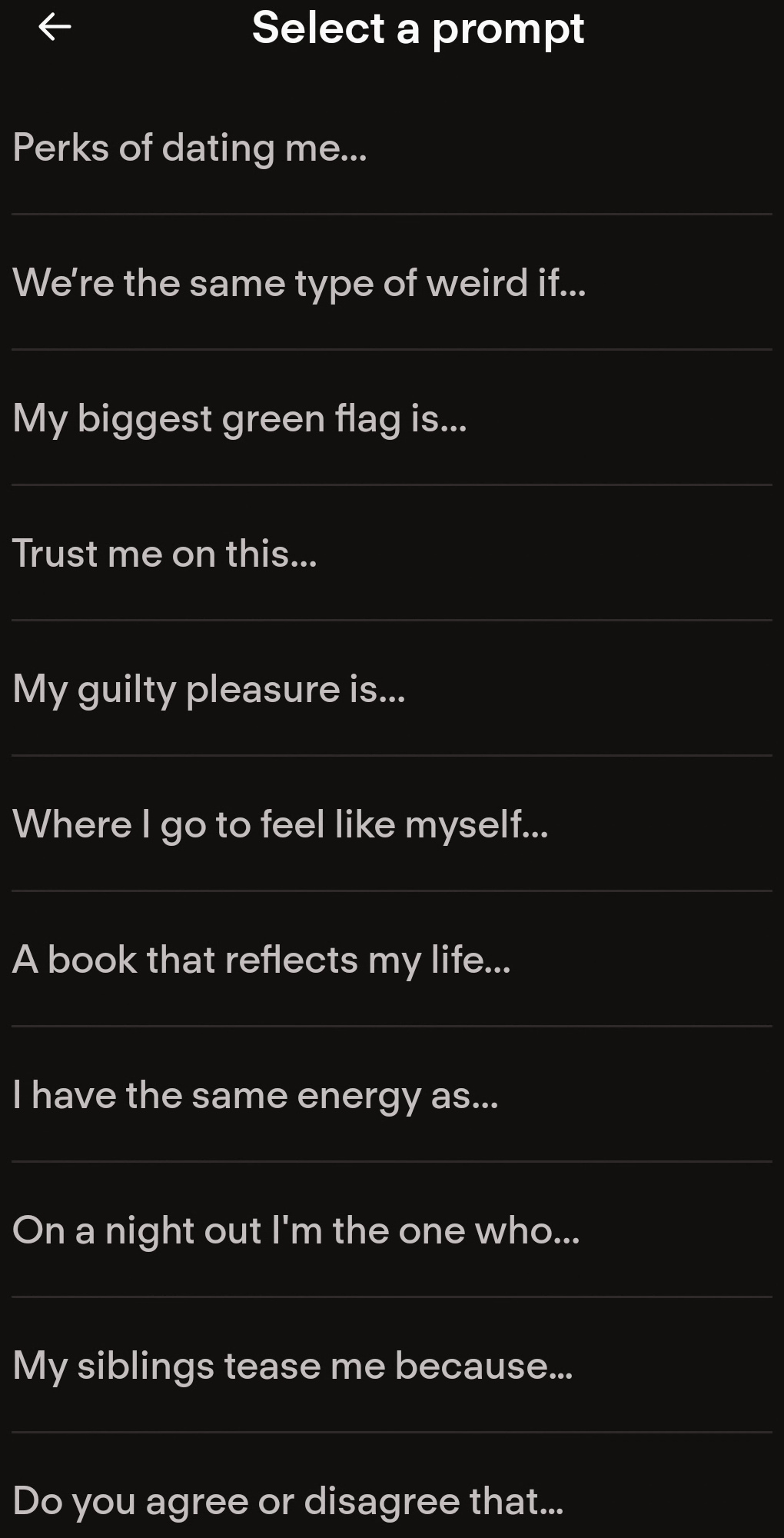
The written parts of a Tinder profile give someone a reason to be interested beyond the photograph. The bio is your short introduction, with up to 500 characters for what you enjoy and what you are looking for. We like the room for a few specific details; generic lines quickly use it up.
Prompts do a different job. You choose a short question and write an answer, giving a match something particular to respond to. Tinder’s options cover green flags, guilty pleasures, nights out and the perks of dating you. “We’re the same type of weird if…” can reveal a shared sense of humour more quickly than a list of admirable qualities.
The difference was clear in the profiles we read. One person used several answers to convey preferences and personality; another put just an emoji in the bio. The tools make a fuller introduction possible, but do not make every profile revealing.
Interests and practical details help the picture make sense
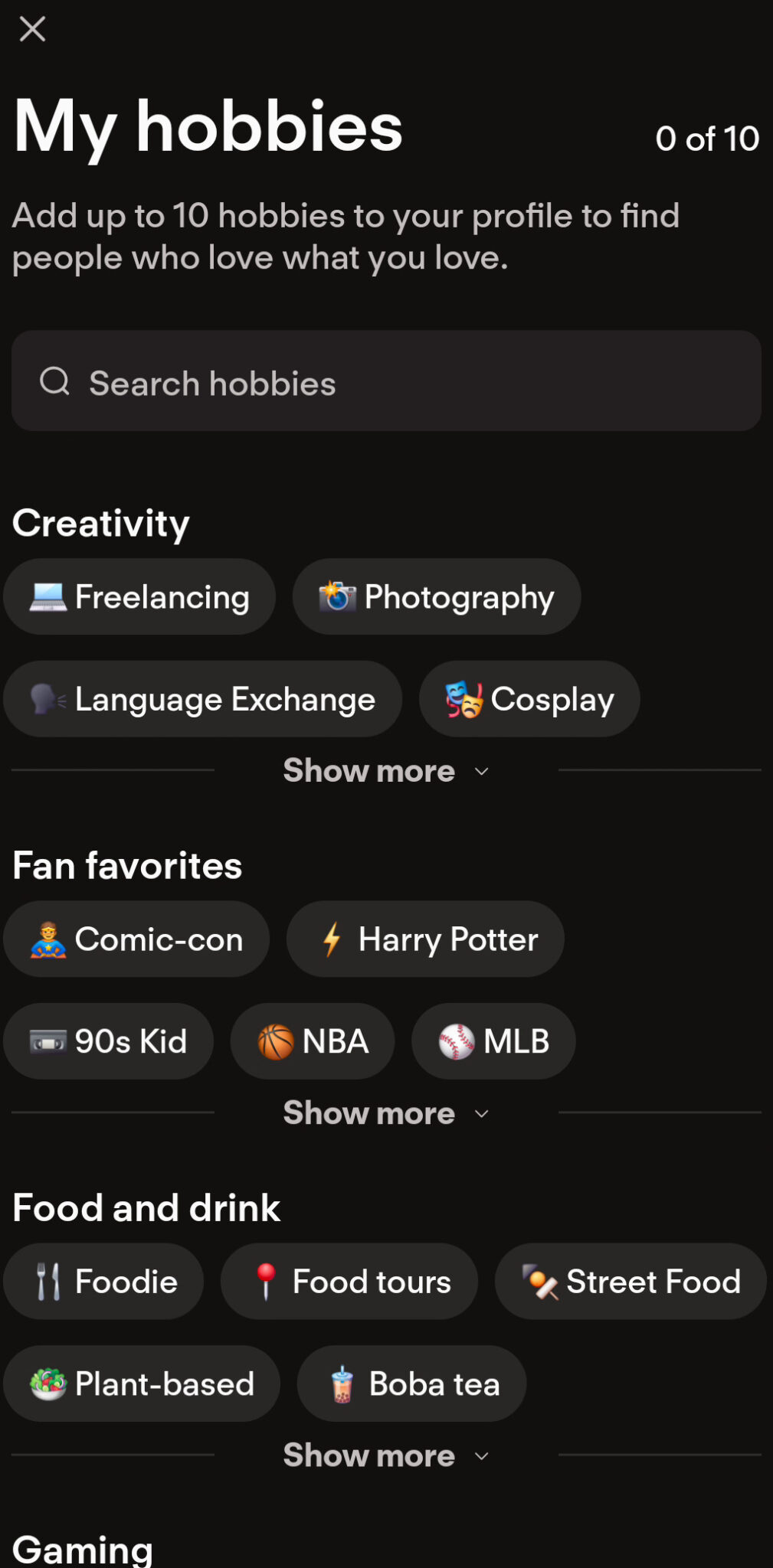
You can choose up to ten interests, organised into categories such as creativity, food and drink, gaming and fan favourites. Other profile modules cover films, reading, games and music, with Spotify options. These are useful little conversation hooks when a photograph alone leaves you drawing a blank.
Separate Basics, Lifestyle and relationship-goal sections add practical information. Profile details include education, zodiac, drinking and smoking information, height and relationship intentions. Those details can help you spot a likely mismatch early. An empty field, however, is a reason to ask rather than an answer in disguise.
How profiles look: striking first, informative if you keep reading
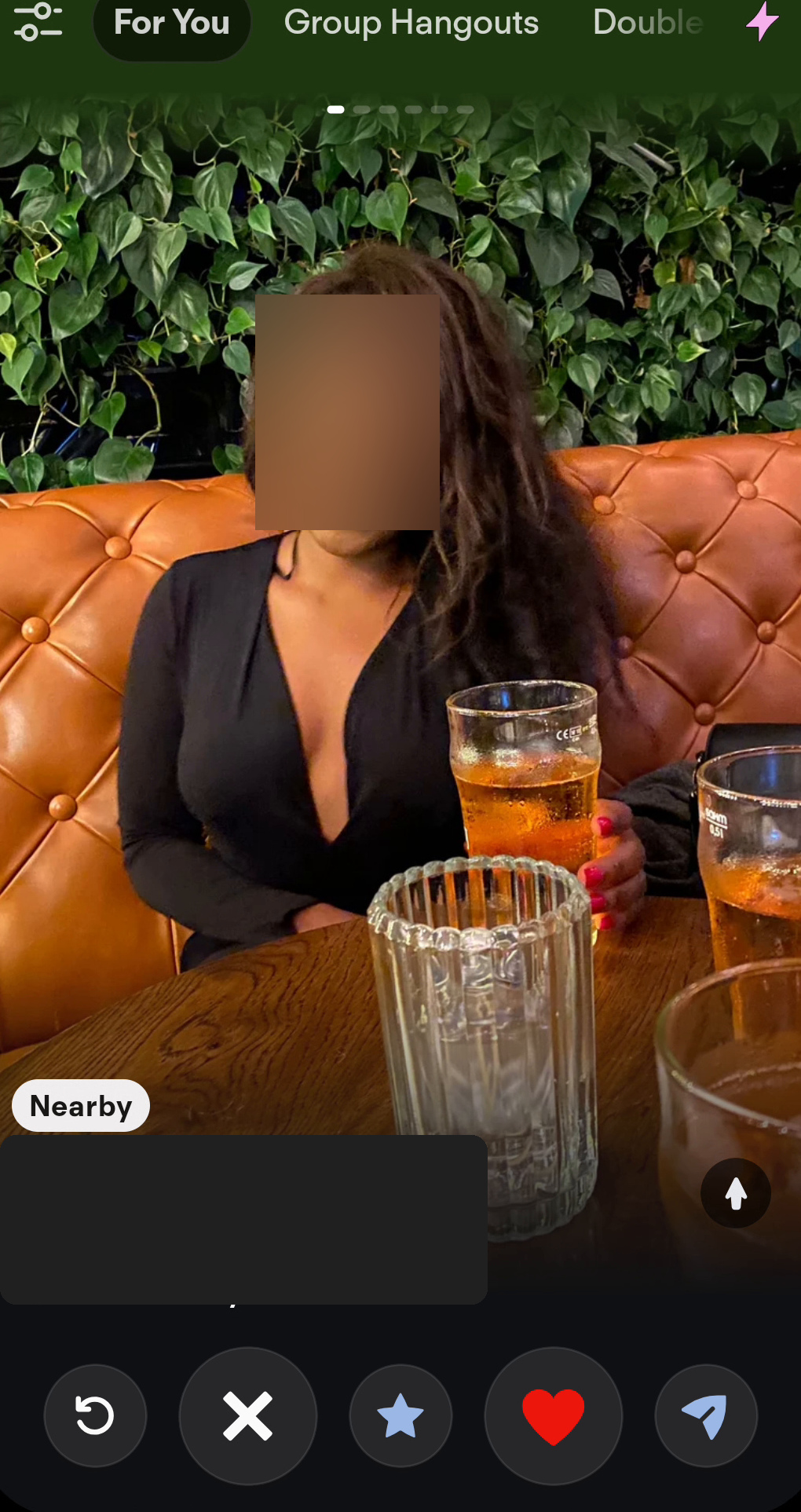
To judge more than an immediate attraction, you need to open the full profile. Tinder’s recommendation card gives a large photograph almost the whole screen, with a name, age, a few details and pass and like controls. It is clear and contemporary, but makes a quick decision much easier than a considered one.
Inside the profile, photographs lead into separate cards for relationship goals, the bio, practical details, prompts and lifestyle information. Those sections help you work out what the person wants and whether you have something in common before showing interest. Large text and rounded sections keep the detail readable. We particularly liked having intentions near the top: a long-term partner and a casual evening are quite different reasons to join.
A detailed profile still requires several screens of scrolling. Prompts can be well below the first picture, and repeated Reply controls add visual noise around otherwise useful content. If you decide from the opening photograph, you may never reach the detail that would have made the person interesting.
Our advice is to open profiles that intrigue you and read a little further. Tinder is capable of a more considered experience than its swipe screen suggests, although it does less to slow you down than a service built primarily around written answers.
Discovery and filters: simple basics, more selective paid tools
Tinder normally brings you a feed of possible people, rather than a directory to search side by side. Your free discovery settings shape that feed by age, distance and who you want to meet. Two optional switches let Tinder widen the age range or distance when suggestions run short. That can keep the selection moving, but is less useful if travelling farther is a firm limit.
We saw exactly that distinction in the test, with a recommendation farther away than the selected distance while widening was enabled. Check these options before assuming the app has ignored your preferences.
The Gold promotion sits above more detailed preferences, including relationship goals, languages, education and lifestyle. These tools have a practical purpose if a particular issue rules somebody in or out. The free experience is less convenient when you want to narrow the selection on those grounds.
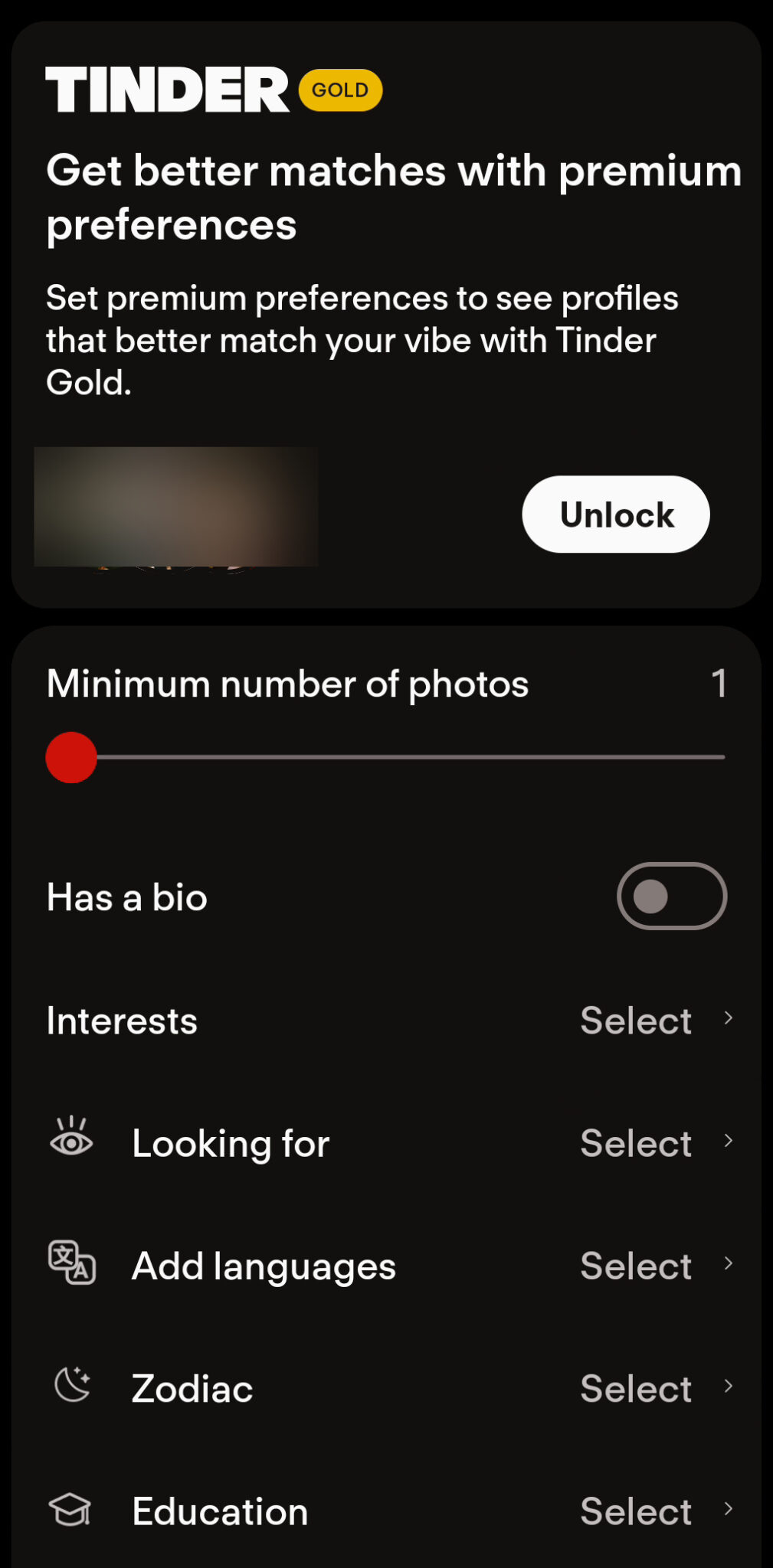
Explore offers a different route through the app, grouping people under intentions such as Long-term partner, Serious commitment, Free Tonight and Short-term fun. We like the clarity of that starting point, though a category is no substitute for reading the actual person’s goals.
The core experience remains a recommendation feed rather than a searchable directory with a useful side-by-side overview.
Matching and contact: a meaningful free service
An ordinary Tinder conversation starts when you both like one another. That mutual interest creates a match, after which you can chat free, as Tinder’s messaging guidance confirms. It means you can find out whether a shared attraction leads to an enjoyable conversation without paying for basic messaging.
Free likes are limited; paid plans advertise unlimited likes. Paying removes a browsing restriction, while ordinary chat still depends on the other person liking you back.
Platinum’s First Impressions offers a separate route: a message before matching. The plan comparison we reviewed listed three a week, so it gives you a few earlier introductions rather than unrestricted access to everyone. We find the free match-and-chat route the stronger starting point.
UK activity: major reach, with reasons to stay realistic
Tinder’s large UK audience is a strong reason to consider it. Ofcom’s Online Nation 2025 report measured about 1.5 million UK adult visitors in May 2025, a 3.1% reach and the largest audience among dating services in that report. For a mainstream app, that is a substantial starting point.
The trend is less encouraging: Ofcom’s figures fell from about 2.5 million in May 2023 to 1.9 million in May 2024 and 1.5 million in May 2025. Men also outnumbered women by roughly three to one in May 2025, which makes the balance of the audience relevant as well as its size.
Recent British Trustpilot reviews describe quiet matches and disappointing engagement, alongside frustrations with support and verification. We remain positive about Tinder’s broad reach, but would use the free feed to see whether the people nearby appeal before paying for extra visibility.
UK prices: what the paid plans add
The basic route through profiles, mutual matches and chat costs nothing. Paid plans add browsing freedom, visibility or the ability to see incoming likes. That makes a subscription optional rather than the entry ticket to a conversation.
Subscription prices and packages vary by offer and purchase route. Check the current in-app quote for the billing period, total payment and renewal price. The figures below are separate UK App Store extras, bought individually or in bundles.
| Separate extra | UK App Store amount | Payment basis |
|---|---|---|
| 1 Boost | £3.99 or £7.99 | Separate single-Boost purchase entries |
| 3 Boosts | £9.99 | One bundle of three |
| 5 Super Likes | £4.99 | One bundle of five |
Which paid benefit would actually help?
| Option | Main benefit | Our assessment |
|---|---|---|
| Free | Profile tools, limited likes, matching and chat | A worthwhile way to assess the people before committing |
| Plus | Unlimited likes; rewinds to revisit an earlier choice; Passport for browsing another location; visibility controls | Useful for more browsing freedom or travel; no incoming-like reveal |
| Gold | Plus benefits and seeing who likes you; Super Likes and eligible monthly Boost | The clearest answer to the blurred likes list, if those likes interest you |
| Platinum | Gold benefits, prioritised likes and First Impressions before matching | Most relevant if you want prominence or a way to introduce yourself before a mutual match |
| Boosts / Super Likes | Separate attention tools and plan allocations | Include any extra spending in your budget |
Plus leaves incoming likes hidden and does not include the Boost and Super Like allowances advertised with higher tiers. A reassuringly grand subscription name does not mean every extra is unlimited.
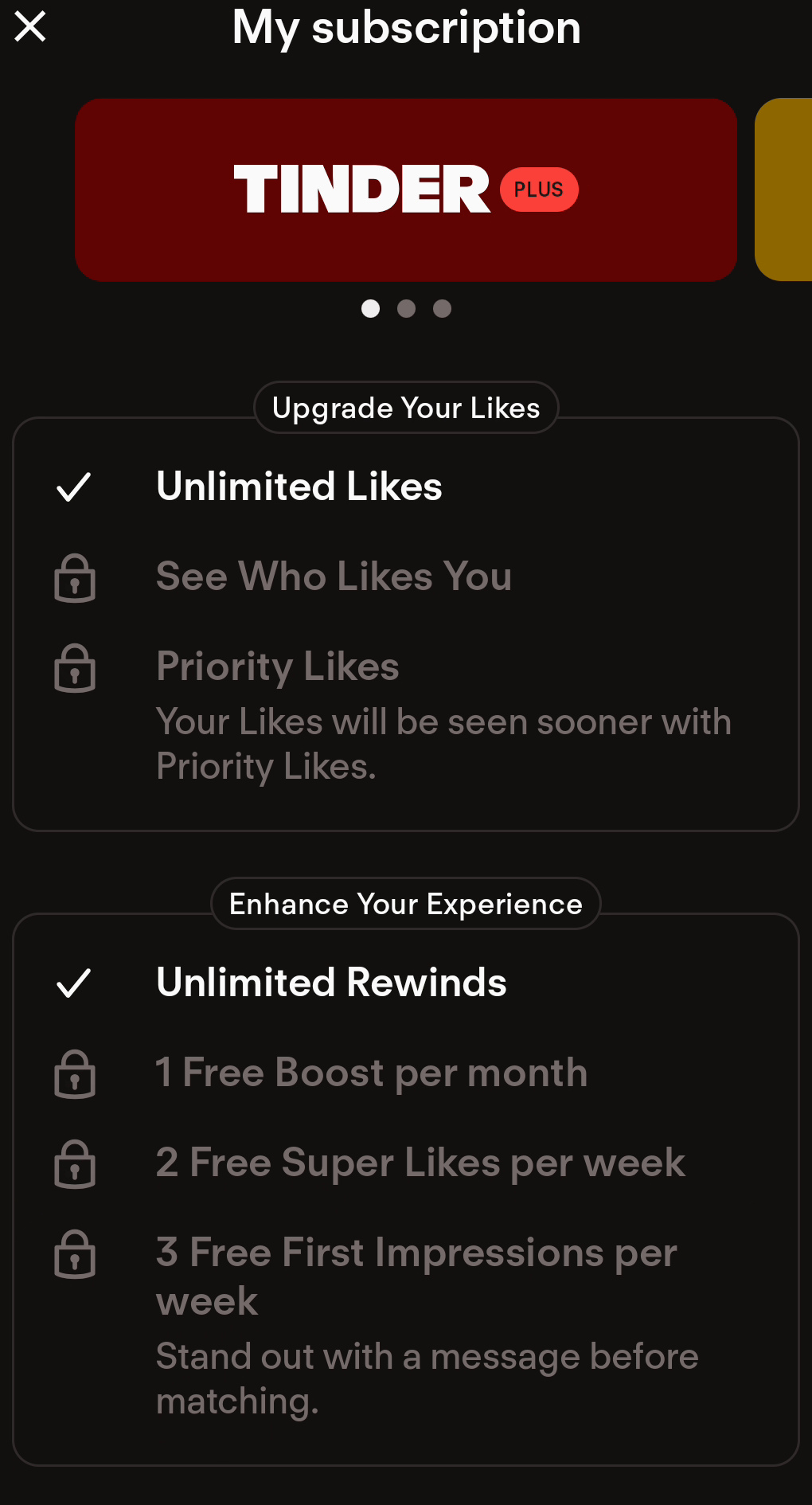
Tinder’s subscription guide notes that monthly Boosts are not included with weekly subscriptions. That limit matters if a Boost is part of your reason for subscribing.
Tinder subscriptions renew automatically unless cancelled. For Apple subscriptions, renewal is charged within 24 hours before the period ends. A promotional first payment and the ongoing price deserve separate attention.
We would pay for a clear practical benefit, such as revealing an already promising likes list or using Passport before travelling. We are much less persuaded by paying simply because a quiet week makes a visibility upgrade feel tempting.
Usability and design: polished, with a persistent sales pitch
Tinder is straightforward to use when moving from the feed to a fuller profile or back to your own introduction. The main navigation is easy to recognise, and the separate profile sections keep longer pages readable. Its dark palette, bold white headings and rounded cards look modern without making the main choices difficult to find.
The editor is more crowded. A persistent Gold banner and shortcuts for Super Likes, Boosts and subscriptions occupy space while you work through your own profile. They compete with the very prompts and interests that could improve the free experience. The contrast between calm profile cards and busy selling is hard to miss.
Safety and seriousness: useful tools, realistic expectations
Tinder caters for several intentions, and we think that breadth is legitimate. Casual dating can be perfectly clear and considerate. The problem is a mismatch between what two people want, which is why the relationship-goal label and a substantive bio matter more than the app’s reputation.
Settings includes photo-verified chat, allowing eligible verified members to restrict incoming messages to other photo-verified profiles. We also found Block contacts and a separate Safety Centre, with reporting guidance and privacy tools. Standard discovery and paid Incognito are distinct choices; the latter limits visibility to people you have liked.
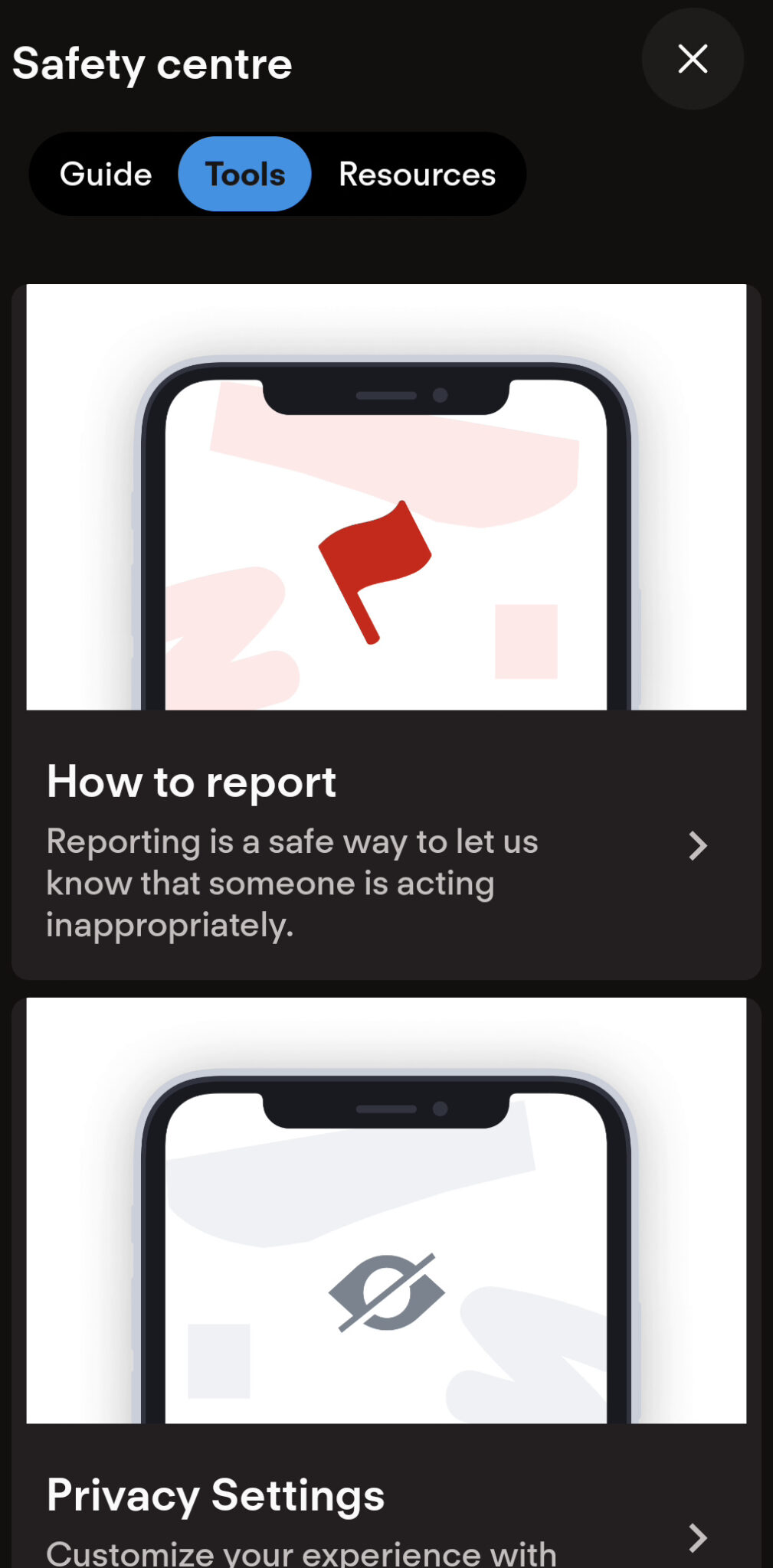
Verification adds a useful check, but it cannot establish somebody’s intentions, honesty or suitability. Tinder’s public safety guidance also describes blocking, unmatching and Share My Date.
Recent British reports of verification difficulties and unhelpful support are a reason to be cautious about the help available when something goes wrong. Keep early conversations in the app, be wary of pressure to move money or follow external links, and choose a public first meeting.
Customer feedback: the app and the paid promise get different receptions
The UK App Store page showed 4.2/5 from about 275,000 ratings when checked. The international Trustpilot profile was much harsher, at 1.1/5 from roughly 5,200 reviews. These review audiences differ, so we would not treat the scores as directly comparable.
Among recent GB-labelled Trustpilot accounts were complaints about quiet matches, low-effort profiles, verification and support. Those complaints matter when the paid tiers are being sold as a way to attract more attention. Our own test found clear navigation and readable profiles, alongside persistent upgrade prompts.
The practical case for Tinder is still strong: a large audience and a free conversation route. The customer evidence makes us less confident about paying before you have a specific reason to do so.
Frequently asked questions
Yes. The free service includes profile creation, limited likes, mutual matching and chat with matches. Seeing the full incoming-like list and unlimited likes are paid benefits.
Matching and chat are free. For Plus, Gold or Platinum, check the billing period, total payment and renewal price in your current offer. Boosts and Super Likes are also available as separate purchases.
Plus adds browsing freedom, including unlimited likes, rewinds, Passport and visibility controls. Gold adds seeing incoming likes and further attention benefits. Platinum adds prioritised likes and a limited number of First Impressions for messaging before a match.
No. Relationship goals and Explore include both longer-term and casual intentions. Read the individual profile and discuss what you want, because a shared app does not imply a shared goal.
Free likes are limited, but our test did not establish a universal daily allowance. Paid plans advertise unlimited likes.
Discovery settings can allow Tinder to show people farther away or slightly outside your preferred age range when suggestions run short. Check those widening options if the boundaries matter to you.
Tinder’s Recently Active guidance describes activity within the last 24 hours. It is not a promise that someone is online now or will respond, and people can hide their activity status.
Ofcom measured about 1.5 million UK adult visitors in May 2025. That supports substantial national reach, not a count of suitable active profiles in your postcode. Local selection and engagement vary.
Our verdict: worthwhile free dating, selective reasons to pay
Tinder earns 4.0/5 · Very good. Its scale and free match-and-chat model remain persuasive. We also like how prompts, interests and practical details can turn a familiar photo card into a more useful introduction.
The app still rewards quick visual decisions, and a detailed profile takes effort to read. Subscription banners, hidden likes and visibility tools keep returning the conversation to money. Build a profile that gives somebody a few real reasons to be curious, then see whether the people in your feed give you the same feeling.
Gold has a clear purpose if you want to inspect incoming likes; Plus can suit someone seeking more browsing control. Platinum is a more speculative purchase when the main attraction is being seen sooner. We would happily start with the free app. A paid tier should earn its place in your budget.
Tinder · 4.0/5 · Very good
A strong free starting point for broad choice, with personality waiting beyond the first photo
Compare before you choose
Alternatives to Tinder

Match
4.4Very good
A long-established option to compare for relationship-minded dating.
Ad

Ourtime
4.2Very good
For singles aged 50+ who prefer a community centred on their stage of life.
Ad

eharmony
4.0Very good
A questionnaire-led approach with detailed profiles and compatibility insights.
Ad