A dedicated queer community and a broad dating app offer different starting points. Compare options for lesbian, bi and queer women, with each service’s audience, profile style, free conversation and paid controls explained.
AdSome links on this page are partner links, marked “Ad”. If you sign up through them we may earn a commission, at no extra cost to you. Unless you change the sorting, partners that pay us commission and score at least 3.0 are listed first, so the order is not a pure ranking by score. How we rank dating sites
Sorted by lowest monthly price, usually on the longest plan. All prices are shown under “Find out more” or in the price comparison.
No sites match these choices.
Ad
3.1
Average
BiCupid
A community for bi singles and couples
BiCupid gives bisexual women, singles and couples space to explain the connections they want. It combines photo-led browsing with detailed introductions and community features. It is a broader mixed community rather than a women-only service, and local relevance matters more than the international membership headline.
BiCupid is straightforward to learn, but comparing people takes more effort than it should. Large photo cards and long feeds slow browsing, search tools sit behind an extra menu, and upgrade prompts compete for attention. Clipped text on the mobile website makes some account controls and results harder to read.
There is more substance here than the photo-heavy first impression suggests. Personal introductions, practical profile details, questions and partner links help people explain their lives and intentions. Community features add other ways to find common ground. The most useful refinements, including recent-activity sorting, distance and much of the privacy toolkit, require Premium.
Local choice was patchy in our searches for women, with more returned matches in London than Manchester or Norfolk and little visible recent activity. Wider suggestions keep the feed moving, but they do not make the nearby selection larger. BiCupid is worth checking locally; we would not treat its international size as a reason to subscribe.
BiCupid supports clear relationship intentions, but its trust safeguards have limits. Detailed introductions and matching preferences help singles and couples judge whether they want the same kind of connection. Photo verification and reporting provide some reassurance without establishing someone’s character or plans. Several discreet-browsing controls cost extra, and the broad content and data-use terms are a drawback if privacy is a priority.
Free browsing and replies to Premium members give you a sensible chance to assess the service. Paying becomes more useful when you want to initiate conversations, refine searches or control visibility. Longer iPhone subscriptions reduce the monthly equivalent considerably, but that saving is persuasive only if the people you want to meet are actually there.
BiCupid gives bisexual women, singles and couples space to explain the people and connections they want. It is a broader mixed community than a women-only service, with personal introductions, practical preferences and room for different relationship arrangements.
We like the substance in the profile tools. Our regional searches for women were much less convincing, and the photo-heavy website can make a small matching selection look bigger than it is.
The introduction matters more than the first large photo
BiCupid’s full profile is where you check what a person or couple wants before approaching them. About Me describes the member and About My Match explains the hoped-for connection, with practical details and preferences to judge whether you fit. The photograph still leads the page; our sparse example gave it most of the attention, while the editor showed how much more context those written introductions could provide.
A headline, voice introduction, interests, first-date ideas and personal questions add further context. There is also a bank of 170 Fun & Compatibility Questions. A couple of specific answers can make somebody easier to approach without turning the profile into an autobiography. Reading the other person’s preferences matters too; a place in your feed does not establish mutual compatibility.
Partner links connect two consenting accounts while keeping separate messages and accounts. Either person can disconnect. We like that clearer relationship context and the separation between linking a partner and handing over an inbox.
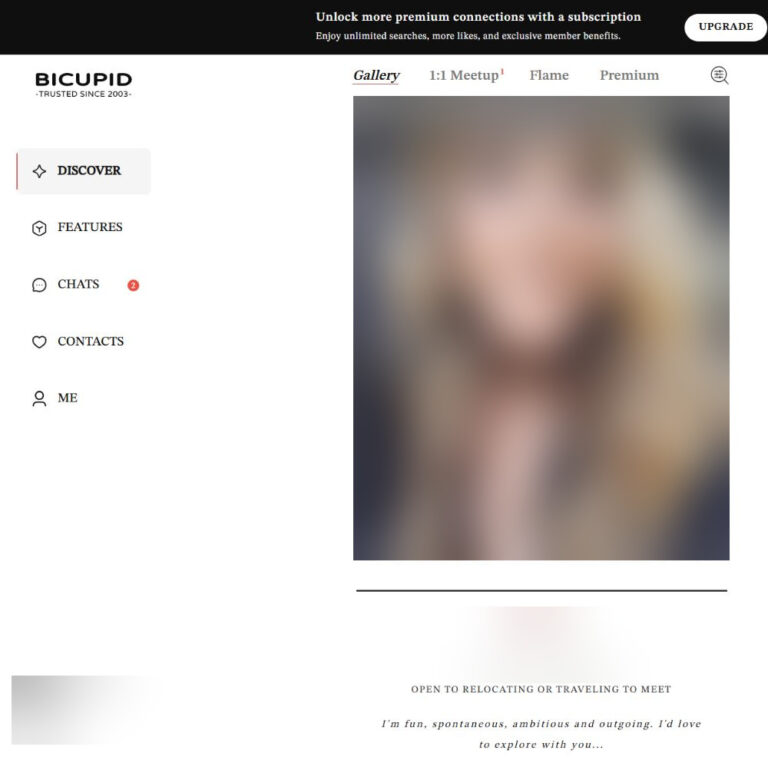
Gallery gives the photograph plenty of room; the written profile needs a closer read.
Gallery, Flame and the everyday browsing experience
You can search deliberately through Gallery or make quicker visual choices through Flame. Gallery lets you choose gender, age and UK country, region or city before browsing the returned profiles. Flame puts a large photograph-led card in front of you with selected information. We prefer reading the fuller context before assuming that a promising picture represents somebody seeking the same arrangement.
The main website navigation is understandable and the black-and-white design is restrained. Comparing people takes more work than it should: huge pictures and long feeds slow the overview, useful search tools sit inside the features menu and subscription reminders keep interrupting. We do not need quite so many invitations to buy something we are still assessing.
The mobile website also clipped text in account controls and the no-results explanation. That was a readability problem in the tested website, not a judgement about the installed apps.
How useful is the local selection?
The local choice in our searches for women was patchy, with few visible signs of recent use. London provided more matching profiles than Manchester or Norfolk, but the continuing feed did not represent an endless nearby selection.
We compared the capital with Manchester and Norfolk to see different regional selections. On 18 November 2026 we searched women aged 20–99, selecting each region with no city restriction or radius. The complete primary matching sections returned 19 profiles in London, three in Manchester and none in Norfolk. London had one Recently online marker and no Online markers; Manchester had neither. The help defines Recently online as within three days.
Gallery then offered “You might also like” suggestions beyond the filters, including people open to travelling or relocating. Those can help a flexible dater, but they are outside the local matching denominator. The checks do not establish the selection for men seeking men or couples, and an empty Norfolk result does not mean no members live there. Inspect the free results relevant to you before paying.
Contact, privacy and the daily experience
Standard members can browse and reply to Premium members. Starting a new private conversation requires Premium, with at least one active Premium participant needed for private messaging under the official guidance.
Premium adds recent-activity sorting, nearest-first ordering, current-location distance and detailed relationship, family and lifestyle filters. These are useful ways to reduce fundamental mismatches.
Moments, meetups, interests and first-date ideas give the community more ways to find common ground. Their presence is not a promise of local events: the meetup we inspected was American. An optional offline auto-reply lets a member choose a stock or custom response; it is a member setting, not evidence of a company-run fictional conversation.
Privacy is part of the paid decision
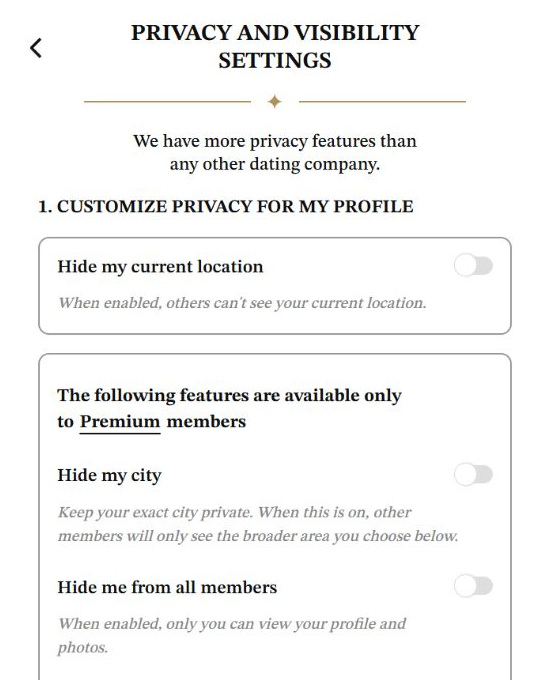
Being able to browse and controlling who can discover your own profile are separate membership questions. Hiding the current location appeared outside the Premium-only controls; hiding the city, anonymous browsing and several selective visibility settings were paid. Those Premium settings revert when membership expires, so the renewal decision also affects the discretion you keep.
The visibility controls differ, and several return to their defaults when Premium expires.
Photo verification links the account user to submitted photographs; it does not establish relationship intentions or replace background checks. The service agreement includes broad content and data-use permissions. Our policy review found no affirmative disclosure of paid fictional dating operators, and BiCupid publicly denied creating AI profiles or artificial likes to encourage subscriptions. Keep that stated position separate from individual users’ allegations.
UK iPhone prices: a cheaper month can mean a dearer decision
These Premium prices come from the UK iPhone catalogue, checked on 18 November 2026. Compare the billing period, full payment and renewal price in your app before subscribing.
BiCupid prices
Length
Price per stated period
Total
UK iPhone catalogue (1 week)
£24.99 per week
£24.99
UK iPhone catalogue (1 month)
£32.99–£34.99 per month
£32.99–£34.99
UK iPhone catalogue (3 months)
£22.66 per month
£67.99
UK iPhone catalogue (6 months)
£17.83 per month
£106.99
UK iPhone catalogue (1 year)
£10.25 per month
£122.99
The year is £10.25 a month equivalent, with the full £122.99 committed at once. The weekly entry costs a great deal for a short look. Apple subscriptions renew unless renewal is switched off at least 24 hours before expiry.
BiCupid’s Trustpilot score was 2.8/5 from only 18 reviews when checked, with three in the previous year. Complaints about geographical relevance and paid value fit the questions our test raises, while positive accounts show that experiences vary. We would choose it for a promising local selection and a specific paid benefit, not the headline size of an international community.
Detailed profiles for finding a lasting relationship
Match suits singles looking for a lasting relationship, with detailed profiles, values and personal prompts alongside a searchable overview. We like having room to get beyond the photographs, although unlimited messaging and advanced search filters require a paid plan.
Match is easy to navigate, with a clear search overview and profiles that are neatly divided into photographs, personal details and answers. Moving from a promising search result to a fuller introduction feels natural. The main irritation is the selling: upgrade banners and paid visibility offers keep competing with the people you came to see. Longer profiles also take time to read and compare.
Match gives you plenty of ways to find someone who fits your life. Search and activity sorting help you narrow the field, while prompts, values and family details give you something to judge beyond looks. Standard includes unlimited messaging; Premium adds the detailed filters we would most want when children, faith or lifestyle are deal-breakers. Those filters are a stronger reason to upgrade than extra Super Likes.
Match offers a strong choice for UK singles, with a particularly encouraging selection in London. Our local check found hundreds of profiles displaying online or recent-use indicators, giving us plenty of people to look at beyond the first recommendations. That is a real strength for anyone who likes to search for themselves, although the choice around your own postcode is what matters before you subscribe.
Match is well suited to singles looking for a lasting relationship. Dating intentions, values and family details make it easier to spot whether you want similar things, and photo and age checks add reassurance. We are less impressed by the recurring customer complaints about verification and support. The profile format is a strength, but we would still take time to get to know the person behind it.
Standard offers good value if you like the local selection: messaging, likes and visitor information are already included. The six-month price works out much cheaper than the shorter passes, but it commits you to £119.94. Premium costs another £30 over that term; we would consider it for the family and lifestyle filters, rather than paying extra simply to attract more attention.
Match offers women seeking women a mainstream route to a lasting relationship. Photographs sit alongside personal answers, values and family details, giving you a chance to learn more about someone before making contact.
That depth is one of the service’s strengths. The local selection matters just as much, though: our London activity figures were not a lesbian-specific search, so use the free account to see who appears for your own preferences.
A modern design that is easy to find your way around
It is easy to move from finding someone to considering a conversation. Search gives you people to browse, Likes shows interest and Matches keeps conversations together. Those clear destinations, readable text and space around photographs make Match feel polished and straightforward to use.
The less pleasant part is the selling. Upgrade banners and offers to boost your visibility keep appearing around ordinary browsing. We understand why Match wants to promote its paid features, but fewer interruptions would make it a calmer place to spend time.
Profiles that give you something to talk about
A Match profile gives you more to consider than whether a photograph appeals. You can read the person’s introduction, check practical details and interests, and see how they answer short questions called Topics. A favourite comfort show or an ambition in the kitchen can suggest an ordinary evening you might enjoy together, as well as a much easier opening for a message.
Values such as loyalty, friendship and humour appear as illustrated cards. They break up the page nicely, although the personal answers tell you more about the individual. Children, faith and dating intentions help you assess whether your lives could fit together. Fuller profiles take time to read, but for a relationship search we think that is usually time well spent.
Photos, values and personal answers share the profile. The member’s face and name are concealed.
Search for yourself or let Match make suggestions
Discover presents recommended profiles one at a time. It is a simple starting point when you would rather browse suggestions than decide on a long list of search criteria.
We prefer Search when we want an overview. Choose an age range, enter a town or postcode and set the distance to bring up a grid of profiles. Sorting by activity or distance makes it easier to concentrate on people who have been back recently or live close enough to meet.
Premium unlocks detailed filters for children, faith and lifestyle. They can save you opening profile after profile only to discover that you want different things. We like that control, although combining too many filters can leave you with a very small shortlist.
An encouraging level of activity
Activity is one of Match’s strengths in our view. Our spot check in London found hundreds of profiles showing online or recent use, giving us good reason to be positive about the choice.
We chose London because it is the UK capital and a useful place to explore a busy city’s dating scene. We searched for women aged 28–41 within five miles and found 1,623 different profiles. Of those, 298 displayed Online now, Active or Recently active. That is a substantial group to explore within a single age range.
Our London spot check
1,623Profiles returned
298With an activity label
Online now · Active · Recently active
The activity labels cover different periods. Try a search around your own postcode to see whether the choice nearby is just as appealing.
What can you do for free?
Free membership
Creating a profile, using the basic search and opening profiles were all possible on our free account. We could read introductions and look through photographs, so joining does give you a chance to decide whether the people interest you.
Standard & Premium
For unlimited conversation, Standard and Premium both included sending messages, reading replies, seeing likes and visitors, and ad-free browsing. Standard therefore covers the main job of getting in touch. Premium adds advanced filters and three Super Likes a week.
Temporary free-conversation offers can appear, as one did on our account. They are worth using when available, but Match is not a permanent free-messaging service.
A good dating format, but mixed customer experiences
Our experience of browsing was positive, but Match’s UK Trustpilot page tells a less cheerful story. It stood at 1.4/5 from around 5,600 reviews when we checked. Renewal charges and difficulty getting help are recurring complaints; some reviewers also describe verification problems.
Those complaints deserve attention, particularly with a longer subscription. More positive reviews describe meeting people who want a serious relationship, which fits what we like about the profile format. The service has a lot to offer, but we are less impressed by that customer-service record.
Match prices: look at the total as well as the monthly rate
Premium costs another £30 over six months: £149.94 against Standard’s £119.94. We think that is reasonable if its family and lifestyle filters improve your shortlist. If the basic search already does the job, Standard is a sensible choice.
The UK web offer checked on 16 November 2026. Both plans included messaging; account offers can vary.
Match prices
Length
Displayed rate
Total
Standard · 1 week
£29.99 / week
£29.99
Standard · 1 month
£39.99 / month
£39.99
Standard · 6 months
£19.99 / month
£119.94
Premium · 1 week
£34.99 / week
£34.99
Premium · 1 month
£44.99 / month
£44.99
Premium · 6 months
£24.99 / month
£149.94
A one-month Standard pass at £39.99 costs more per month but puts less money at stake. That is the trade-off: a cheaper monthly rate is only better value if you are happy to use the service for longer.
Shared interests, family plans and relationship intentions can tell you more than another carefully chosen photograph. Those are eharmony’s strengths. The deciding factor is still whether its suggestions include women you would like to meet in a realistic travel area.
Finding your way around eharmony is straightforward, with clear profile sections and settings that are easy to find. Browsing is where it feels less smooth: profiles can mean a lot of scrolling, Discover gives you a limited overview and upgrade prompts interrupt the flow.
eharmony gives you more to go on than a photo and a short bio. Compatibility breakdowns and family and lifestyle filters help you judge whether someone's plans fit yours, while distance search keeps the practicalities of meeting in view. Premium adds messaging, but the plan differences matter: Light and Plus limit the matches you can unlock, while Unlimited gives you the widest access.
Our UK searches suggested a substantial choice of profiles, and recent-login information helps you see who has been back to the site. That is a promising starting point, but the experience is still local. Reports of limited nearby suggestions make it worth checking your own area before committing to a plan.
The questionnaire, family preferences and profile prompts put relationship goals at the centre of the service. They give you more to discuss before meeting and a clearer sense of whether your plans fit.
Premium can be worthwhile when the suggestions interest you and you are happy to use the service for several months. Three-month terms offer more flexibility, but the longer commitments and different contact allowances mean the cheapest monthly figure is only part of the decision.
Shared interests, family plans and relationship intentions can tell you more than another carefully chosen photograph. Those are eharmony’s strengths. The deciding factor is still whether its suggestions include women you would like to meet in a realistic travel area.
eharmony is a compatibility-led dating service for singles looking for a lasting relationship. Its detailed profiles bring together relationship goals, everyday habits and personal answers, with compatibility information to help you make sense of the suggestions.
We think the profiles are its strongest feature. There is more substance here than on a service built around quick swipes, although you need patience for the questionnaire and the long introductions. It is a better fit for someone looking for a lasting relationship than a casual fling.
We see its strongest fit around ages 25–55, particularly if you want to compare family plans and everyday habits before meeting. The detailed, slower format can appeal to younger and older singles too.
A personality quiz, with room for your own words
eharmony uses the Compatibility Quiz to explore how you think about relationships, then brings that information into your Personality Profile and compatibility scores. Questions about your outlook and needs give the suggestions more context than age and a photograph alone. Allow around 20 minutes, according to eharmony. We like having the explanation, although the person’s own words still matter more than a high score.
The personal prompts add something the algorithm cannot. An answer about an ideal first date or a perfect day gives you an opening for a conversation. We would put as much thought into those answers as the questionnaire.
Personal questions give you room to explain what matters to you in your own words.
Clean design, but a slower way to browse
The website is orderly and approachable, with clear sections for profiles, likes, messages and settings. Discover presents one detailed suggestion at a time. That gives the person room to make an impression, but it also means plenty of scrolling. We would prefer a clearer overview when comparing several suggestions, and fewer upgrade prompts interrupting the browsing.
Look for someone who fits your actual life
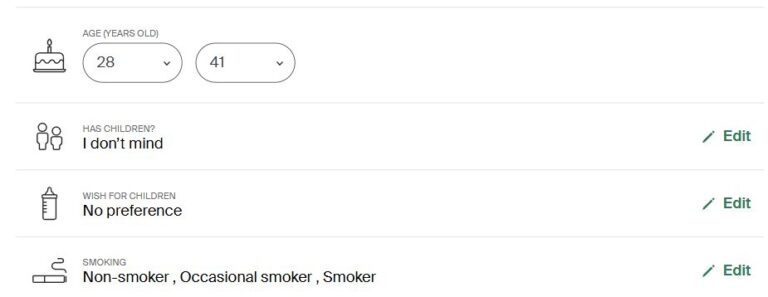
The preferences help you concentrate on people whose everyday plans could fit yours. Set age, children, wishes for children and smoking to narrow the suggestions: agreement about family plans is often more useful than another shared favourite band. Premium adds nearby-distance search and further criteria, including religion and education.
Family plans and lifestyle preferences help narrow the search to people whose plans fit yours.
A broad selection, with local choice still to check
eharmony offers an encouraging breadth of relationship-focused profiles, although the people within reach matter most. Our broad UK searches showed hundreds of profiles even with an interest selected in our 28–41 age range. Recent-login information helps you notice people who have returned to the site. Reports of limited nearby suggestions are a reason to inspect your own area before taking out a long subscription.
Free membership and the three Premium levels
Basic lets you explore the suggestions and decide whether the service interests you before choosing a paid plan. It has no fixed trial deadline, although photos are generally blurred and contact is limited.
Premium mainly changes how freely you can contact people and how much of their profile you can see. Light and Plus use Match Unlocks: an unlock extends your own ongoing messaging access with one profile. The allowances count people, not individual messages.
Light: 15 Match Unlocks per 30 days and one photo per profile.
Plus: 30 Match Unlocks per 30 days, all photos and visitor information.
Unlimited: messaging with all your matches, all photos and a new-member filter.
What does eharmony cost?
These are the regular Premium Light prices recorded in our review:
eharmony prices
Length
Per month
Total
3 months
£33.90
£101.70
6 months
£23.90
£143.40
12 months
£15.90
£190.80
Prices recorded on 1 November 2026. Offers and account prices vary; the total shows the full initial commitment before any discount. Subscriptions renew automatically unless you stop renewal.
On the regular annual prices we saw, Plus cost £24 more than Light, while Unlimited added another £24. Seeing all photos and having more contact allowance makes Plus a sensible step up for some people. Unlimited is harder to justify if you only want a few conversations at a time.
The annual Light plan works out at £15.90 a month, with a regular total commitment of £190.80. That is the route behind the headline price. The renewal term and charge are set out in the order confirmation; stopping renewal does not remove payments already agreed for the current term. We would compare those commitments with the people we actually wanted to contact before choosing a plan.
A sapphic dating app with expressive profiles, clear relationship goals and free matching and messaging. Useful filters and discretion tools are paid.
AudienceLesbians
Age20–40
Activity levelMedium
Free matching and messaging
Detailed identity and relationship goals
Photos, questions and lifestyle details
Premium from
£13.99HER Premium is listed from £13.99 in the UK App Store. Apple does not state the subscription period. Check your in-app offer for the full payment and renewal price.
HER feels modern and readable, with clear text cards and an uncluttered profile editor. Large photographs give each person space, although finding the practical details takes scrolling. Unlabelled navigation icons and prominent upgrade promotions add friction to an otherwise approachable app.
HER gives sapphic dating useful detail: pronouns, identity fields, relationship goals, questions and lifestyle information help you understand a person beyond their pictures. Themed discovery adds another way in. Important filters and discretion tools are paid, and the community features advertised online did not match the Android navigation we inspected.
HER is a credible niche option for British sapphic dating, with continuing UK use and recent community activity around the brand. Individual experiences are mixed, including both relationships and frustrating browsing. The evidence supports trying your own area, without promising a large or responsive nearby selection.
Clear relationship goals make HER useful for finding people who want the same kind of connection, from friendship to a life partner. Verification and moderation offer safeguards, but British complaints about suspicious profiles and account handling temper our trust. Its openness to casual dating is part of its purpose, not a reason to dismiss it.
Free matching and messaging make HER worthwhile without a subscription. Gold can add practical filtering and privacy controls; Platinum mostly expands convenience and visibility. Paying makes sense when a specific restriction is getting in your way, but the public UK price list does not explain billing periods clearly enough to compare commitments.
HER centres sapphic dating, welcoming lesbian, bisexual and queer women, non-binary people and trans sapphics. It offers more than a photograph: identity choices, personal questions and relationship goals help people explain who they are and what they want.
We find that a thoughtful starting point. Free matching and messaging make it worth exploring, while paid discovery controls and uneven British experiences give us reasons to assess the actual selection before committing.
Profiles with more than photographs
HER’s profiles give you ways to work out whether somebody’s personality and plans appeal before making contact. Up to six photographs can show different sides of a life, while the bio and questions add something specific to respond to, from a queer awakening to the way you show you care. Dragging the pictures into order shapes the first impression; a recognisable written detail makes a conversation easier to start.
Pride Pins, pronouns, identity fields and dating goals sit alongside family plans, relationship style and lifestyle information. They can reveal a fundamental mismatch early. Places lets you add up to three venues you love or want to try, and an optional Spotify connection can show top artists. Those are good conversation starters, provided you are comfortable sharing what they reveal about your routines.
Photo ordering helps shape the first impression; written sections can supply the personality.
Modern design, with a lot to scroll through
Discovery asks you to consider one person at a time. A large photograph leads into About Me, more pictures and practical sections such as Key Info and Lifestyle, letting you move from attraction to the details that could change your decision. Clear headings and readable text give the writing a proper place in that introduction.
The sheer height is the drawback. Useful details can be below another large photograph, while fixed pass, Wildflower and like controls occupy part of the lower card. Bottom navigation icons lack permanent labels too. We found the main layout approachable, but it asks a quick browser to slow down and look beyond the picture.
Discovery and contact
Age and distance provide the free discovery basics. A separate Gold Filters section adds detailed identity, relationship, family and lifestyle choices. Reading somebody’s family plans is useful; filtering out incompatible plans before they reach your feed can save much more time. That control belongs to the paid service.
Ordinary chat opens through mutual interest: like somebody, match when they like you too, and messaging is free. Free swipes have a daily limit. A note can accompany a like, giving the person something specific to consider from your reaction to their bio. Wildflowers and Boosts buy extra attention; we would put thought into that introduction before paying for prominence.
Questions offer a way to start with something more individual than appearance.
UK activity and community
HER is a credible option to explore for British sapphic dating. Recent British accounts describe both relationships and frustrating browsing, while a London campaign and singles-night activity show the brand participating in the wider community. That supports trying the app, rather than promising a uniformly busy nearby feed.
Our British activity assessment draws on separate research, rather than a counted UK profile pool. Use the free suggestions to judge whether the people within your travelling distance interest you.
Event Listings and themed profile browsing were present in the app. Our nearby-events screen was empty, and the sporty themed selection included a person outside the main feed’s age and distance settings. Check the details when moving between discovery routes. Topic-based communities are promoted online, but a separate social feed was not in the Android navigation we inspected.
The paid decision is chiefly about control and convenience, because matching and messaging already work for free. Gold narrows discovery with premium filters and adds change location, Incognito, ad-free browsing, profile views and rewind. Platinum adds incoming likes, priority likes, unlimited swipes, read receipts, a monthly Boost and re-match. We would identify the restriction you need removed first: several practical privacy and filter tools are already in Gold.
The public UK purchase listings we checked did not state subscription periods, and we did not verify a complete UK Android tariff. We therefore cannot turn the catalogue amounts into monthly prices or calculate an honest total commitment from them. Compare the named Gold or Platinum plan, access period, total charge and renewal in your own offer. Subscriptions renew until cancelled through the purchase route; removing the app does not stop billing.
Share the detail that serves your dating life
HER’s relationship goals support serious and casual intentions without assuming everybody wants the same thing. Verification and moderation add safeguards, while British complaints about suspicious accounts and account handling temper our trust. A badge does not certify every profile claim.
Incognito hides you until you like somebody first, which can be useful if being openly discoverable is uncomfortable. Detailed identity, intimacy and location-related fields can help a match understand you, but they also disclose more. Choose the information that helps you date; the form does not need to become an encyclopaedia of your life.
Zoe is a dedicated app for lesbian, bisexual and queer women, with dating, relationships and friendship all represented. Mutual matching and chat are free; we like the room for a personal introduction, although adverts and paid visibility controls are significant drawbacks.
Zoe is easy to understand, but the free experience is much less pleasant than its tidy menus suggest. Large photographs, clear profile sections and simple filters make the basics approachable. Full-screen adverts repeatedly interrupted ordinary navigation in our test, and the bottom action buttons compete with the profile text when you scroll.
Zoe covers the essentials of dating well, with free mutual matching and chat, a personal introduction, interests and relationship intentions. Those details help you judge more than a photograph. Premium adds useful shortcuts such as seeing likes, changing location and undoing passes, but the more selective identity and intention filters are also behind the paywall.
Zoe has a documented UK audience and is worth trying for women who want a dedicated dating pool. The practical choice nearby is less certain: published research establishes a historical British user base, while customer experiences range from making connections to running out of suggestions. We could not establish a current UK active-user count, which keeps our activity assessment moderate.
Zoe gives relationships, dates and friendship a clear place, with intentions and personal details that can help you recognise a compatible outlook. Photo verification and reporting add useful checks. We are less impressed by the paid privacy controls and the mismatch between their website description and the Android offer. A verified photograph is reassurance about the picture, not a guarantee about someone’s intentions.
Free chat after a mutual match is Zoe’s strongest value argument. Premium can be worthwhile for seeing likes, Travel or removing adverts, and the named £19.99 monthly plan is easier to justify than repeated £8.99 weekly payments. Charging for basic visibility controls is disappointing, especially when you can already do the central job of matching and chatting without subscribing.
Zoe puts women who date women at the centre of the app, including lesbian, bisexual and queer women and trans and non-binary people who date women. You can look for a relationship, dating or friendship, then use mutual likes to decide who gets a conversation started.
We like the accessible idea and the fact that ordinary matched chat is free. The experience around it is less convincing: the interface is simple, but the full-screen adverts can make a short browse feel like hard work.
Profiles with room for an actual introduction
The first impression is a big photograph, but the fuller profile can explain what someone wants and what their life is like. An About Me introduction, relationship intentions and interest tags make it easier to move beyond appearance. Some profiles make good use of that space; others leave you very little to go on.
We found the editor easy to follow. Interests are searchable, covering ordinary conversation starters such as books, cooking and climbing, while identity fields offer choices including non-binary and gender fluid. Those sensitive fields ask for separate consent. Social handles and a song are optional additions, not a substitute for telling someone about yourself.
A large photograph leads the profile; the bio and personal details follow below.
Finding people and opening a conversation
Zoe shows one suggestion at a time. You can open the full profile before liking or passing, and ordinary chat starts once both people like each other. That keeps the basic route to a conversation free, although it offers less of an overview than a grid of search results.
Age and distance are the basic filters. The verified-only switch requires your own profile to be verified first. More selective filters for intentions, sexuality and gender identity carry a Premium label, as does Travel for browsing another location. Paid likes information can save time, but revealing a like does not make the person a suitable match.
A British audience, with local choice to establish
There is credible evidence that Zoe reaches UK users, though current local activity is harder to pin down. A 2025 Demographic Research study included a UK subsample of 35,347 users in data covering January 2023 to May 2025. This establishes a historical British audience; it is not a count of people active nearby today.
Our account could not use paid Travel, so we did not conduct a UK location search. Customer reports range from making connections to running out of suggestions. We would use the free browsing to judge the local choice before paying for any shortcut. The global study’s concentration in the twenties and thirties informs our editorial age fit of 20–39, not a measured UK age breakdown.
Free chat, paid convenience and a privacy catch
Free matched chat is a meaningful advantage. Premium adds seeing likes, Rewinds, swipe history, Travel and ad-free browsing. Removing adverts is especially tempting after the repeated full-screen interruptions in our test, but the people nearby should still be the main reason to spend money.
Invisible mode and hiding age or distance showed Premium locks on our Android account. Zoe’s homepage calls these free, so its information is inconsistent. That is disappointing for an audience that may have particular reasons to want discretion. Photo verification is useful, but it checks photographs rather than guaranteeing someone’s intentions.
These visibility controls required Premium in the Android settings we inspected.
What the UK Premium prices mean
The named UK iPhone catalogue entries checked on 24 November 2026 were £8.99 for one week and £19.99 for one month. These are researched catalogue prices; account offers and purchase routes can differ. The monthly plan is more economical than repeated weekly payments, while the weekly plan puts less money into the first term.
Subscriptions renew automatically for an equivalent period under Zoe’s published terms. Manage renewal through the Apple or Google account used to pay, at least 24 hours before the term ends according to Zoe’s store description. Removing the app or dating account does not cancel that subscription.
Thoughtful profiles, with a familiar swipe-style start
Bumble combines personal prompts and practical profile details with a clear, modern design and free chat after a mutual match. It suits singles seeking dates or a relationship, with paid filters for a more selective search.
AudienceSingles seeking dates
Age20–40
Activity levelHigh
Free conversations after a mutual match
Prompts and practical details add substance to profiles
Bumble feels modern and comfortable to browse, with clear navigation and readable profile sections. Photos, interests and short answers have room to breathe. Fuller profiles take quite a bit of scrolling, though, and the floating SuperSwipe star and repeated upgrade prompts compete with the person you are trying to read about.
Bumble gives you useful ways to make a more considered choice. Prompts, valued qualities, relationship goals and family details can reveal common ground before a conversation, while Discover offers another route beyond the main card stack. Free mutual-match chat is a real strength; incoming likes, advanced filters and Travel sit behind Premium.
Bumble offers a credible starting point for UK dating thanks to its substantial national audience. Ofcom places it among the country’s most-used dating services, although reports of thin local selections temper that reach. Nearby choice still matters more than the national headline, and the app does not show who is currently online or recently active.
Bumble can support an intentional search for a partner, but it serves several kinds of dating. Relationship and family fields help you spot compatible plans, while prompts give people a chance to show personality. Optional detail means profiles vary in substance, and verification and reporting tools cannot establish someone’s intentions for you.
Bumble’s free version provides good everyday value because matching can lead to a conversation without a subscription. Premium has a practical case when its filters or incoming likes save you time. The £9.99 seven-day Premium example keeps the initial commitment short, but is expensive for a brief upgrade. Premium+ and separate visibility purchases are harder to justify on hope alone.
Bumble is worth comparing for women seeking dates or a relationship who want room for personality and practical compatibility in a profile. Interests, prompts and family plans give you more to consider alongside the photographs.
The design is clear and modern, and chat after a mutual match is free. The question for you is whether the nearby selection is worthwhile; the national audience figures do not measure the local pool of women interested in women.
Readable profiles, with room for more than a photograph
To decide whether someone is worth getting to know, you can read beyond the photograph into their bio, interests, short written prompts and practical details. These sit farther down the large cards in People, Bumble’s main profile feed. Work, education, relationship goals and family plans can help you judge whether your lives might fit. A specific prompt answer also makes a first message much easier to write.
The format works best when people use it. We saw thoughtful introductions alongside much shorter answers. Fuller profiles mean several screens of scrolling, and the floating SuperSwipe star sometimes competes with the details you are reading.
Practical details and prompts give the introduction more substance than the opening photograph.
People and Discover offer different ways to browse
People is the main profile feed. Discover groups recommendations around interests and dating goals, giving you another route when the next photograph tells you little. Bumble says these recommendations draw on your profile and past matches.
Age and distance preferences keep the basics manageable. Premium unlocks more detailed filters for relationship intentions, family plans and lifestyle. Those can save time when a mismatch matters, although very tight preferences leave fewer people to explore. We found navigation straightforward; the account dashboard, with subscriptions and visibility offers, was busier.
Free chat, with a deadline to get started
A mutual like creates a match, after which ordinary conversation is free. Current guidance lets either person send the opening message. There are 72 hours from matching to start and 72 hours from the first message for the recipient to reply. Opening Moves have been removed.
The standard chat timeline
A mutual matchEither person can start→
First messageWithin 72 hours of matching→
First replyWithin 72 hours of the first message
Either person can start under the current rules, with deadlines for the opening message and first reply.
A substantial UK audience, with local choice still to check
Bumble has the reach to be a credible UK option. Ofcom recorded about 1.1 million UK adult visitors in May 2025, placing it among the country’s largest dating services.
Our Android test did not measure a British profile pool, and the app has no online or recently-active status from which to count availability. British customer accounts of thin selections and quiet matches make the free feed around your own area a more useful buying guide than the national headline.
What the paid plans add
Boost
Boost removes some browsing restrictions: unlimited likes, Backtrack to revisit a mistaken pass and rematching after a connection expires.
Premium
Premium adds the incoming-like list and advanced filters. Its Incognito option limits visibility to people you have chosen, while Travel lets you explore another city virtually. We see a clearer practical benefit in finding people with compatible plans than in paying simply to be seen more often.
Premium+
Premium+ concentrates more heavily on visibility and extra attention tools.
The UK iPhone price example checked on 14 November 2026 was seven days of Premium for £9.99 in total. Offers can vary, so check the full charge and renewal price in your account before buying.
Bumble prices
Length
Listed amount
Total
7 Days Premium · UK Apple catalogue
-
£9.99
Subscriptions renew automatically. Cancel through the service or app store that took payment; deleting the app does not cancel the subscription. We would use the free profiles and chat first, then pay when a particular filter or incoming-like view would improve an already interesting selection.
A modern, welcoming LGBTQ+ app with a wide range of dating experiences. It can be overwhelming at first, and social features may overtake the dating.
AudienceLGBTQ+
Age18-24
Activity levelVery high
Modern LGBTQ+ dating app
Wide variety of dating experiences
Social networking can overtake dating
Premium from
£0.99Taimi Bronze is listed from £0.99 in the UK App Store. Apple does not state the subscription period. Check your in-app offer for the full payment and renewal price.
When you download Taimi, the first thing you’ll notice is the sophisticated design and intentional messaging. They’re on a mission to create a safe space for those in the LGBTQ+ community to interact and meet one another without any pretences. They’ve worked very hard in curating an online dating app that feels like home, and we honestly have to say that they’re doing a great job.
Impressive social app with more than dating on the menu
What sets the app apart is that it acts as a portal to a wide range of services. It’s not only a dating app. It also bundles together a social network, live streaming site and more – all of which circles around the same context and worldview. Surprisingly, the result is an app that doesn’t feel unnecessarily busy, demonstrating that the design has been carefully considered throughout.
Promising future as one of the greats
All in all, Taimi is a great place to meet other queer women who are looking for an exciting dating experience with all the bells and whistles. Their community is growing very fast, and it looks like they’re going to be a force to be reckoned with in the years to come. Why not get ahead of the game and join this fast-growing masterpiece?
Pros
✓Wide variety of different dating experiences available
✓Sleek, modern design
✓Open-minded and welcoming
Cons
✗Can be a bit overwhelming at first
✗Social networking seems to be overtaking dating focus
Prices
Taimi prices
Length
Catalogue price
Total
Taimi Bronze · duration not stated
£0.99
Check term and renewal
UK iPhone catalogue entries checked on 24 November 2026. Only entries with a stated period are shown as weekly or monthly prices; other catalogue amounts have no verified subscription duration. Check the selected plan, total and renewal before paying.
Photos, prompts and practical details help you find a personal opening. Matching and messaging are free; advanced relationship filters and visibility extras cost more.
AudienceSerious singles
Age25–40
Activity levelHigh
Prompts with personal conversation starters
Free matching and messaging
Optional voice, video and polls
Premium from
£12.99Hinge+ is listed from £12.99 in the UK App Store. Apple does not state the subscription period. Check your in-app offer for the full payment and renewal price.
The calm layout and clearly separated profile sections make Hinge easy to settle into. Large photos and readable prompt cards give each person proper attention. The trade-off is a lot of vertical scrolling, a limited overview of your options and frequent invitations to upgrade.
Hinge gives you unusually good material to work with: reorderable photos, three written prompts and optional voice, video and polls. Liking a particular answer makes interest more specific. The paid filters and incoming-like tools add useful control, although locking family plans and dating intentions behind a subscription weakens the free toolkit.
There is a substantial UK audience to explore: Ofcom measured roughly 1.5 million adult visitors in May 2025. That gives Hinge the reach of a mainstream service. British reports of quiet matches and uneven local choice keep us below a top score; national reach cannot tell you how many suitable people will engage nearby.
Hinge supports a more considered choice of partner through prompts, relationship intentions and practical profile fields. Selfie verification adds evidence that someone resembles their photos. Even so, the intentions menu spans life partners and short-term dating, and British feedback includes unclear goals and poor follow-through.
Free matching and messaging make Hinge worth trying without a financial commitment. Paying can solve specific frustrations such as restrictive filters or viewing likes one at a time. The visibility upgrades, separate Roses and personalised offers are less persuasive reasons to commit for months, especially before you know whether your local suggestions suit you.
Hinge gives women seeking a relationship a profile format with room for personal answers, intentions and everyday compatibility. Set who you want to meet, then read the photographs and prompts before responding to something that interests you.
We like the clearer starting points for a conversation and the free matched chat. Our audience evidence covers Hinge across the UK; it does not measure the local pool of women seeking women.
Profiles you can get to know in stages
A Hinge profile is designed to give you things to react to before a conversation starts. Six media positions and three written prompts let a person show how they spend time, what they want and something of their humour. Optional voice, video and a poll can add humour or warmth that a photograph misses. We particularly like an answer with an everyday detail: it gives someone a reason to ask a question, instead of having to invent a conversation from scratch.
Large photographs alternate with white prompt cards. The clear sections make a fuller profile inviting, but reading it all takes several screens. Practical details can sit in a horizontal row, so a quick glance will miss some of the information about family plans, lifestyle or what a person wants.
A photograph leads into a personal prompt, with a separate heart for the answer.
A personal way to show interest
Tap the heart beside a picture or answer to send a like with an optional comment. You can make clear what caught your attention. If the other person likes you back, ordinary messaging is free. Incoming likes appear one at a time on the free service, and the daily number of likes is limited.
From interest to conversation
Like a photo or promptAdd a comment if you want→
The other person likes you backYou have a mutual match→
Chat for freeNo subscription needed
Standouts is a separate selection which uses Roses instead of normal likes. A Rose is a more conspicuous introduction, but the extra attention has a price and does not make the other person more compatible.
Useful basic preferences, with important paid filters
Hinge brings you recommendations one at a time, and your preferences help shape which people appear. Free choices include age, distance, religion and relationship type. A deal-breaker option distinguishes a firm boundary from something you would merely prefer. We would start with a distance you could comfortably travel: a promising profile is less useful if meeting is impractical.
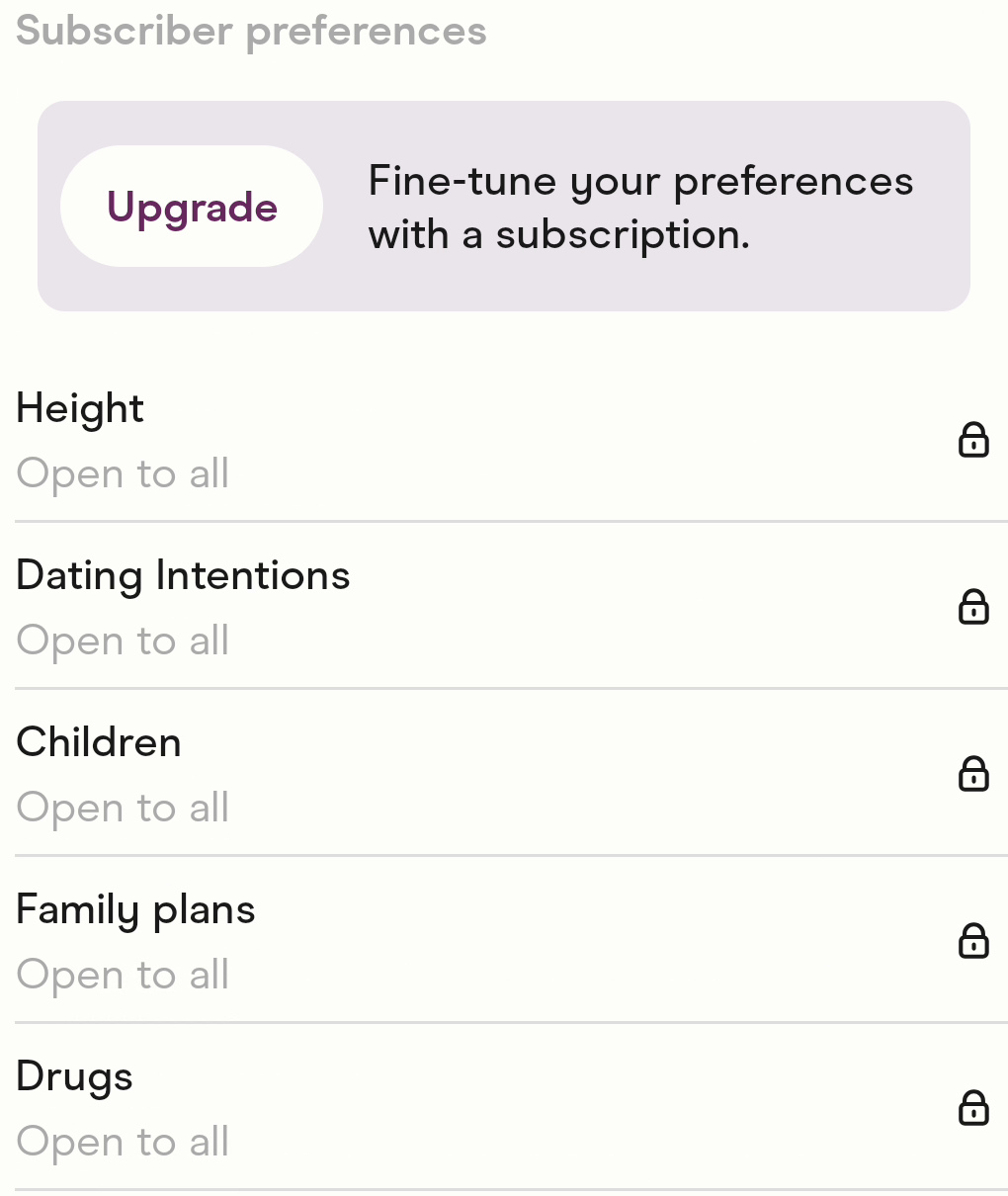
Subscriber filters include dating intentions, children, family plans and lifestyle. They can save a relationship seeker a great deal of manual reading. Their absence from the free toolkit is frustrating when family plans matter more than another chance to be seen.
Children, family plans and dating intentions were among the subscriber filters in our free account.
An established UK audience
Hinge has enough national reach to be a credible mainstream option. Ofcom measured around 1.5 million UK adult visitors in May 2025, close to Tinder. That is evidence of a substantial audience during a particular month.
British customer feedback included quiet matches and disappointing paid value, while UK App Store accounts praised the profile format and described lasting relationships. We would explore the free feed around your own preferences before buying more visibility.
Hinge+, HingeX and the cost of convenience
Hinge+
Hinge+ unlocks unlimited likes and undo skips, all incoming likes together and advanced preferences. These are useful when filtering or managing existing interest is the problem.
HingeX
HingeX adds enhanced recommendations, ongoing visibility and priority likes. It is a harder purchase to justify if the people themselves do not interest you.
HingeOne appeared as a lighter option on our account, while the public subscription guide focuses on Hinge+ and HingeX. Check the tier, billing period, total and renewal in the offer shown to you; the UK catalogue entries we checked did not establish a complete subscription tariff.
The app’s restrained white-and-purple design and readable prompts make it pleasant to use. We are less keen on the pale supporting labels and repeated invitations to upgrade. Its strongest feature remains available free: a profile that gives you something personal to say, followed by a conversation when the interest is shared.
Tinder is a mainstream dating app for casual dates and relationships, with free matching and chat. We like its simple design and the room for profile personality, although photos dominate and upgrade offers are persistent.
AudienceSingles seeking dates
Age20–40
Activity levelVery high
Free matching and chat
Prompts, hobbies and relationship goals
Substantial independently measured UK reach
Premium from
£3.99Tinder Plus is listed from £3.99 in the UK App Store. Apple does not state the subscription period. Check your in-app offer for the full payment and renewal price.
Tinder is easy to settle into, with clear navigation, bold type and readable profile cards. The dark design feels modern and the main choices are easy to understand. Looking beyond the photograph takes more scrolling than the swipe screen suggests, while persistent subscription banners make profile editing feel crowded.
There is enough here to make a considered choice: photos, written prompts, hobbies and relationship goals can reveal both personality and practical fit. Explore adds a useful route by intention, and matching and chat remain free. The one-person-at-a-time feed gives little overview, while the likes list and more selective preferences are used to sell upgrades.
Tinder offers the scale we want from a mainstream UK dating app, making it a strong starting point for a broad choice of people. Ofcom measured about 1.5 million UK adult visitors in May 2025, placing it first among dating services. Falling reach and British reports of quiet matches temper that strength: a large national audience does not make every local feed lively.
Tinder works best when you are clear about your intentions and willing to check somebody else’s. Relationship goals and substantive prompts support both casual and longer-term dating, and verification and reporting tools provide useful safeguards. Sparse profiles and recurring British complaints about poor engagement and support make it less reassuring than the polished design initially suggests.
The free version offers real value because a mutual match can become a conversation without a subscription. Gold can remove the frustration of hidden incoming likes, while Plus and Platinum buy more control or visibility. Personalised offers, separate attention tools and automatic renewal make the paid proposition harder to judge; the benefit needs to be worth your full commitment.
Tinder is one of the UK’s best-known dating apps, used for everything from casual dates to longer-term relationships. You browse profiles one at a time, like the people who interest you and can start chatting when the interest is mutual. Matching and ordinary chat are free, so a subscription is optional.
We like how easy it is to get started and how much personality a well-filled profile can show. The design is modern and straightforward, but photographs still dominate the first impression. The constant encouragement to buy more attention is less appealing.
A familiar swipe, with more behind the photograph
The main feed gives each person a large photo card, with their name, age and a few details. Swipe right to like them or left to pass. It is an easy format to understand, although it encourages quick decisions and gives you little overview of the other people available.
Opening a profile helps you decide whether the initial attraction has more behind it. The bio, relationship goals, interests, prompts and practical details give you clues about what the person wants and what you might enjoy talking about. We like having the relationship goal near the top. Someone looking for a long-term partner and someone available for a casual evening may both use Tinder, but they are not necessarily looking for each other.
Give people something to start a conversation about
The profile editor has room for several photographs, a bio of up to 500 characters and answers to short questions called prompts. Hobbies and lifestyle details add more ways to spot common ground. A specific answer about your ideal Sunday makes a better conversation starter than another claim that you enjoy having fun.
The profile format can be revealing, but the effort varies. In our test, some people used written answers to show their personality; another bio contained just an emoji. Fuller profiles also take several screens of scrolling to read. It is worth opening the ones that interest you before deciding from the first photo.
Prompts offer a structure for showing humour and everyday personality.
Finding people who want the same thing
Tinder chooses the profiles in your feed; the free discovery settings let you shape that choice by age, distance and who you want to meet. Options to widen age or distance can keep suggestions coming when the feed runs short. Turn them off if those limits matter to you: travelling farther is not automatically a better match.
Explore groups people under intentions such as Long-term partner, Serious commitment and Short-term fun. That is a handy starting point when you want something more specific than a general feed. More detailed preferences, including relationship goals, languages, education and lifestyle, are part of the paid proposition. They can save time if you keep opening profiles only to find an obvious mismatch.
More selective preferences are reserved for paid access, which matters if you want to narrow the feed.
A large UK audience
Tinder remains a strong option if you want a broad choice of people. Ofcom measured about 1.5 million UK adult visitors in May 2025, placing it first among dating services in that report. Its reach had fallen from earlier years, but it was still a substantial audience.
That national picture is encouraging. Recent British customer reviews are less enthusiastic about engagement, with complaints about quiet matches and low-effort profiles alongside support and verification problems. We would use the free app to see whether the people nearby appeal before buying extra visibility.
What is free, and what would you pay for?
Free membership
A free account lets you build a profile, browse, use a limited number of likes and chat with mutual matches. That last point matters: you do not need to pay simply to have a conversation with someone who has liked you back.
Plus, Gold & Platinum
Plus adds browsing tools such as unlimited likes, rewinds and Passport for exploring another location. Gold adds the ability to see who has liked you, which has a clear purpose if you would rather choose from incoming interest than keep swiping. Platinum adds priority and earlier-contact features. We are less persuaded by those if the main attraction is just the hope of being noticed sooner.
Is a paid plan worth it?
We would start free. Gold can be worth considering when hidden incoming likes are frustrating you, while Plus makes more sense for someone who wants greater browsing control or plans to use Passport. Boosts and Super Likes are additional ways to attract attention, so include any extra purchases in the budget. They serve a different purpose from revealing an incoming-like list or filtering for compatibility.
Tinder’s subscription prices depend on the offer and purchase route. Check the plan, billing period, total payment and renewal price in the app before subscribing. The choice is easier when you know which feature you want: paying more is not a substitute for finding people you actually want to meet.
Feeld makes everyday browsing feel calm and personal, with a distinctive dark design, readable profile sections and a clear four-part navigation. Photos, bios and tags are easy to distinguish. Long profiles need scrolling, the filter bar hides some options off-screen, and upgrade offers become prominent around likes and account tools.
Feeld gives people unusually useful ways to explain their intentions and relationships. Long bios, desire and interest tags, hidden bios and linked partner profiles add context before a conversation. Free mutual-match chat is a real strength. Majestic adds more control over visibility, incoming likes and recent activity, although those benefits require a subscription.
Feeld is a worthwhile prospect for open-minded dating in larger UK cities, but immediately relevant local choice is less clear than the lively profiles suggest. London exploration brought up varied, readable profiles, including people exploring from elsewhere. Recent activity is paywalled, and UK customer experiences are uneven, so we rate activity Medium rather than promise a busy nearby feed.
Feeld supports clear intentions particularly well, whether you want a relationship, a casual connection or to explore with partners. Explicit intent fields and linked profiles can reduce misunderstandings. Optional photo verification and consent controls add useful safeguards, but the sensitivity of the information shared and Feeld’s historical security failures temper our trust assessment.
Feeld offers good value without a subscription because browsing, connecting and chatting after a mutual match are included. Majestic is most persuasive when privacy or managing incoming interest matters to you. The annual option lowers the equivalent monthly cost but commits more money upfront, and separate Pings and Uplift can make an apparently modest budget grow.
Feeld can suit lesbian and bisexual women and other queer adults who want space to discuss desires and relationship styles. It includes singles, linked partners and couple pairings, with gender preferences and LGBTQIA+ mode to shape discovery.
We find the detailed profiles useful, but this is a mixed community rather than a women-only app. Specific sexuality filtering is unavailable, so read the profiles and set the preferences that matter to you.
A distinctive design with room to read
The near-black purple design separates generous photographs, light text and tags clearly. Four main areas keep discovery, incoming interest, connections and account tools within reach. It looks considered and feels calmer than a directory full of competing banners.
Profiles still need several scrolls. Floating reaction controls occupy part of the lower card and the filter bar hides some options sideways. The writing is worth reaching: stopping at the opening picture misses much of what makes Feeld useful.
Bios, desires and linked partners
The profile is where you work out whether somebody’s approach to dating fits yours. Feeld’s public About section allows up to 1,500 characters for expectations, interests and boundaries, while up to ten desires, ten interests and three intents distinguish preferences, shared activities and relationship aims. Holding an unfamiliar term opens a glossary. We like that combination of space for explanation and help with the vocabulary.
The hidden bio lets you keep a little more personal context away from ordinary discovery. It becomes available through Likes or Connections to people you like or send a Ping, Feeld’s direct signal of interest. Expressing interest can therefore reveal it before a conversation develops. Keep essential expectations in the public introduction and choose the hidden detail for that more specific audience.
Public and hidden bios serve different audiences; liking somebody can reveal the hidden section.
Constellations link up to five partners while retaining separate profiles and chat histories. The links give another person a clearer picture of existing relationships. Agree what they communicate together, and remember that Majestic, Feeld’s paid membership, covers only the subscriber rather than every linked partner.
Discovery and conversation without rushing the decision
Discover lets you move sideways between people without immediately liking or disliking each one. We appreciate being able to read a few profiles before deciding where to begin. Location, age, distance and gender controls shape the selection, with individuals and couple pairings represented.
Ordinary chat opens when two people like one another. A Ping goes to a separate area and can include a note if the recipient accepts notes. It is a more direct approach, not a purchased reply. History lets free members revisit likes sent in the last 24 hours; Majestic extends that to seven days and adds a second look at selected dislikes.
Local choice and paid controls
Feeld is a worthwhile prospect for its city-based niche, but a lively-looking feed is not necessarily a large selection within easy reach. Exploring a listed city also changes the audience in which your own profile appears, and visitors can be exploring from elsewhere.
We examined the account’s existing London exploration as the available city example. Of ten profiles read, six were marked as exploring London from other places. The bios and partner context were varied and useful, but the free account gave us no complete matching total or usable activity timestamps. We could not measure a recently active share. Our Medium assessment recognises the niche’s potential while leaving local depth and engagement uncertain.
Recently online covers the previous seven days and requires Majestic, alongside Last seen and incoming likes. Those tools could make timing and relevance easier to judge. They were visible paid benefits in our free test, not functions we unlocked.
Some of the most useful controls for timing and relevance belong to Majestic.
What Majestic is worth paying for
Free membership
Free browsing, mutual connections and chat already let you try the basic dating experience.
Majestic membership
Majestic is the paid membership for more control: managing incoming likes, refining by desire or recent activity and choosing greater discretion through Incognito and private photos. It also adds unlimited likes, wider History access and one daily Ping without rollover, with the first arriving the day after subscribing. We would choose it for a particular restriction you want removed.
We find privacy and managing existing interest more persuasive reasons to pay than unlimited likes alone. Incognito hides you until you like or Ping somebody, but two people both using it will not find one another through that route. Private photographs are for connections; a hidden bio has a different audience again.
Price and privacy
The named UK iOS Majestic listings checked on 14 November 2026 were £19.99 for 30 days, £32.99 for 90 days and £99.99 for a year. The annual payment is about £8.33 a month equivalent, with £99.99 paid upfront. These are published store products; the account’s current offer and purchase route determine availability and renewal.
Feeld prices
Length
Per month equivalent (UK iOS)
Total
Majestic UK iOS (30 days)
£19.99
£19.99
Majestic UK iOS (90 days)
£11.00
£32.99
Majestic UK iOS (1 year)
£8.33
£99.99
Subscriptions renew automatically unless cancelled through the store or service that took payment. Deleting the app does not cancel membership. A shorter term puts less money at stake while you decide whether the privacy or management benefit is genuinely useful.
Openness still needs control over sensitive information
Optional photo verification checks likeness, while UK age assurance is separate. Controls for Ping notes and explicit-image blurring can help manage unwanted approaches. Detailed desires, relationship information and partner links still deserve a conscious choice about what you want other people to see.
Historical security failures weigh on our trust judgement. Fortbridge reported serious flaws in 2024; Feeld says they were fixed and independently retested, with no evidence of malicious access. The customer picture is mixed too: when checked, the UK App Store showed 4.0/5 from about 22,000 ratings, while Trustpilot stood at 1.3/5 from 195 reviews. Reliability, verification and paid value recur in complaints. We would start with the free selection and spend on a specific improvement to an experience that already interests you.
These 10 options use different free-contact rules. A dedicated community may include mutual-match chat, while a broader service may reserve contact or more selective filters for paid members.
Prefer to start chatting without paying? You can send messages for free on HER, Zoe, Bumble, Hinge, Tinder and Feeld.
Yes Partly No Not confirmed
Dating site
View profiles
Read messages
Send messages
BiCupidFree browsing and replies to Premium members; Standard cannot start a conversation, and at least one participant needs active Premium
Yes
Partly
Partly
MatchProfiles and basic search are free; promotional contact can be available, while unlimited messaging is paid
Yes
Not confirmed
Partly
eharmonyBasic account with suggestions, generally blurred photos and limited messaging
Partly
Not confirmed
Partly
HERLimited free swipes, free matching and messaging; Gold adds detailed filters and discretion tools, while Platinum adds incoming likes and visibility extras
Yes
Yes
Yes
ZoeFree chat after a mutual match; seeing likes, Travel, advanced filters, ad removal and several visibility controls require Premium. Verified-only discovery first requires verifying your own profile
Yes
Yes
Yes
BumbleLimited free likes and free chat after a mutual match; either person can start within the current 72-hour rules
HingeLimited free likes, chat after a mutual match and one-at-a-time incoming likes; advanced filters are paid
Yes
Yes
Yes
TinderLimited free likes and free chat after a mutual match; Plus, Gold and Platinum add controls and visibility
Yes
Yes
Yes
FeeldLimited free likes and free ordinary chat after a mutual connection; Majestic adds incoming likes and recent-activity tools
Yes
Yes
Yes
Based on our reviews of the free profile. “Partly” means the feature is limited, for example to a set number of messages or to only some profiles.
Prices
How much do lesbian dating sites cost?
Prices vary between apps made for queer women and mainstream sites that also welcome them. Here you can compare the shortest term and the lowest monthly price for the 10 options before deciding whether you need to pay.
Cheapest long term£8.33 / monthFeeld · Majestic UK iOS (1 year)
Prices come from our reviews and can change. Before you pay, always check whether the subscription renews automatically.
Age and audience
Which site suits your age?
Pick your age and we’ll highlight the sites that cover your age group. The bars show the age groups each service is aimed at or best suited to in our assessment.
Age ranges draw on provider information and our editorial assessment of who each service suits. They are not measured membership age distributions. Adults outside these ranges may also find a service suitable.
Find the right type
What are you looking for?
A dedicated queer community, a relationship-focused profile format and an open-dating app meet different needs. Compare who the service welcomes and how introductions work.
Dedicated or broader LGBTQ+ communities
Compare audience fit, discovery and the room to explain your identity and intentions.
We score each option from 0 to 5 for user-friendliness, features, activity, seriousness and price, and the overall score is based on all five. Partners that pay us commission and score at least 3.0 are listed first, so the order does not follow the score alone.
We test each siteWe create a profile and use the site as a member would, to see what it offers, who it is aimed at and how it works.
We compare the featuresHow does searching for profiles work? What can you do for free? And what does a subscription cost?
We give our verdictWe rate ease of use, features, activity, reliability and price, and list strengths and weaknesses.
We keep reviews up to dateFeatures, prices and terms change, so we update our reviews and check that the sites we list are still running.
It can make audience fit clearer. A broader app can offer another selection or profile format. Compare both the service’s audience and the actual people nearby.
Who can join these communities?
Audience rules differ. The comparison includes services for lesbian, bi and queer women alongside broader LGBTQ+ and adult platforms. Read the current service’s eligibility and preferences rather than assuming identical rules.
Is conversation free?
It often is after a mutual match, but that does not make every discovery tool or introduction free. The table identifies the practical boundary for each service.
Do verification badges guarantee a safe date?
No. A badge adds context to a profile, but cannot certify intentions or every personal claim. Keep ordinary privacy and meeting precautions.
Are the age ranges joining limits?
The compact ranges reflect our assessment of the primary fit, not a measured distribution or automatic upper-age limit. Check the provider’s actual joining requirements separately.